
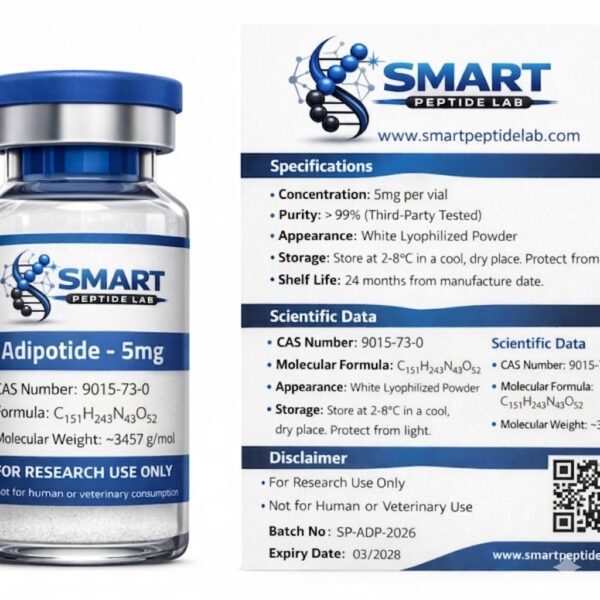

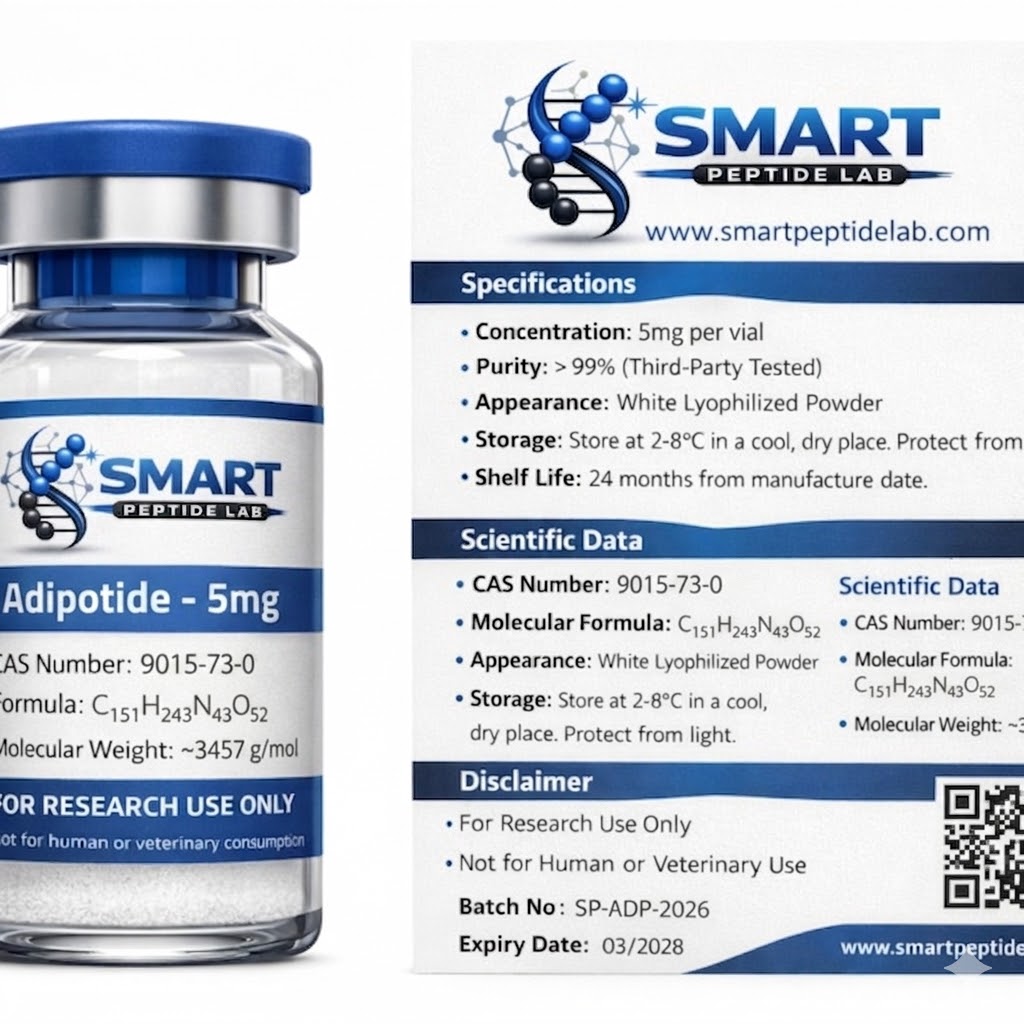
Order Adipotide Peptide (FTPP)
Adipotide Peptide, also known as FTPP (Fat-Targeted Proapoptotic Peptide), fat-targeted proapoptotic peptide, or proapoptotic peptide, has been widely researched and is posited by scientists to be a proapoptotic peptide that may contribute to cell apoptosis. Adipotide may possibly act as a peptide targeting prohibitin, which is why it also bears the name Prohibitin-targeting peptide 1 (Prohibitin-TP01). Current research is still exploring Adipotide’s potential in this area and its potential actions related to its targeting properties. (1) Prohibitins are natural proteins considered by scientists to regulate such functions as cell formation, metabolism, and inflammation.
Research teams initially considered Adipotide for its supposed potential to mitigate the action of cancer cells. Still, the peptide indicated it may have research potential for experiments investigating lipolysis and obesity mitigation, leaving the research pioneers “at a loss of words.”(2) It was presumed that Adipotide might prevent blood supply to the cancer cells, resulting in cell death and malignant cell growth inhibition. Upon further research, it was suggested by the scientists that the peptide appeared to exhibit the same mechanism of action but on fat cells instead. This “proof of concept” study was an early-stage experiment suggesting that the peptide may have significant potential. Yet, the compound has to be studied further to understand its full potential and impact on cells.
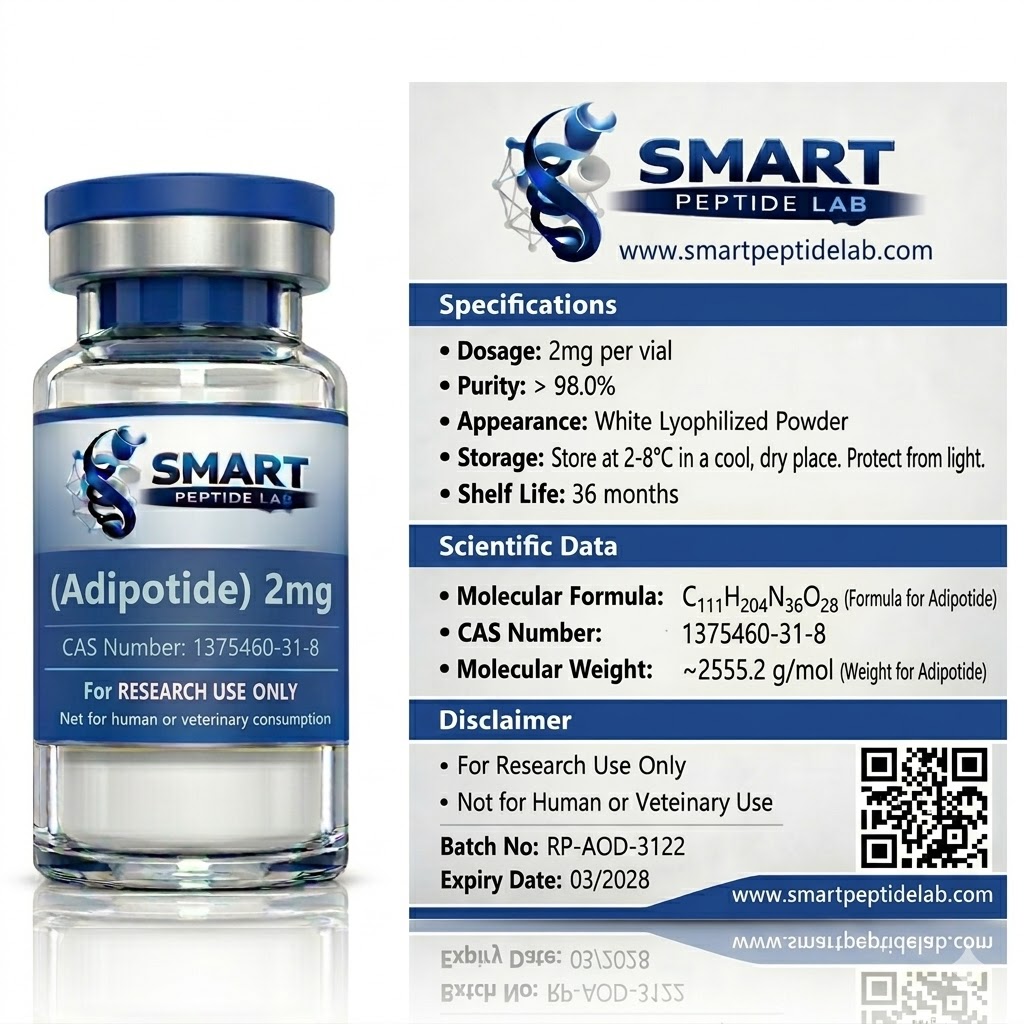
Order Adipotide 2mg – Targeted Fat Reduction Peptide
Adipotide is a cutting-edge peptide designed to support targeted fat loss by promoting the breakdown of stubborn fat cells. At 2mg per vial, this formulation is ideal for individuals seeking a focused approach to body composition and metabolic optimization. Adipotide works at the cellular level to help reduce adipose tissue, supporting a leaner, more defined physique when combined with proper diet and exercise.
Key Benefits:
Supports targeted fat reduction
May enhance metabolic activity in fat cells
Helps improve body composition and definition
Supports a structured weight management plan
Overview
Researchers isolated a naturally occurring peptide (sequence CKGGRAKDC) via phage display methodology and combined it with a proapoptotic sequence, forming the now-termed Adipotide compound. Adipotide is homologous to the peptide sequence found in the white adipose tissue. Owing to this development and characteristics, researchers suggest that the peptide may possibly target the prohibitin PHB1 found at the surface of the adipose tissue – possibly attaching and thereby damaging them, potentially causing a blood supply disruption to the adipocytes (fat cells).(1) Prohibitins are considered by scientists to act as a vascular marker of the fatty tissues, and Adipotide may possibly be able to identify these markers and consequently conduct apoptosis on these cells.(3) Further, researchers speculate that Adipotide may interact not only with prohibitin but also another receptor called annexin A2 (ANX2) and thus potentially disrupt their role in supporting blood and fat supply to fat cells in white adipose tissue. Studies suggest that prohibitin and ANX2, when interacting in a complex with a fatty acid transporter called CD36, potentially facilitate the uptake of fatty acids by the endothelium and their subsequent transport into adipocytes. One study suggested that there was a purported white adipose tissue hypotrophy in murine models lacking ANX2, despite apparently normal white adipose tissue vascularization, adipogenesis, and glucose metabolism. This condition was potentially attributed to reduced fatty acid uptake by white adipose tissue endothelium and adipocytes. It was suggested that the efficiency of fatty acid transport relies on the interaction of ANX2 and prohibitin. This interaction was posited to be essential for mediating fatty acid transport from the endothelium into adipocytes. Additionally, it was commented that ANX2 and prohibitin form a complex with CD36, and this interaction is crucial for fatty acid transport. Importantly, the colocalization of prohibitin and CD36 on the adipocyte surface was induced by extracellular fatty acids, suggesting a dynamic regulation of this protein complex in response to fatty acid levels. The study posited that the biochemical interaction between ANX2 and prohibitin potentially regulates CD36-mediated fatty acid transport in white adipose tissue, unveiling a potential pathway that compounds like Adipotide might target.(4) Consequently, Adipotide is posited to potentially burn the fat stored in these fat cells as fuel, according to researchers’ speculations.(2)
Based on early preclinical studies on monkeys, it was also suggested that following Adipotide presentation, the monkeys exhibited apparently reduced insulin resistance.(5)
Adipotide (FTPP) and Malignant Cells
Scientists surveyed a number of blood vessels and tissues (both normal and malignant), and isolated and studied the various peptides and molecules distributed in them. Peptides, proteins, and certain molecular distributions are considered to be specific and differentially expressed in normal and cancer tissues under control conditions. Through various chemical isolation and analytical techniques, researchers posited four native ligand receptors that appeared to be specific to certain types of carcinogenic cells. These receptors may, in turn, be vascular markets, and the researchers suggested that Adipotide exerts some of its potential action via these receptors. Notably, the research suggested four native ligand-receptors within the cells comprising the vasculature, two apparently common across multiple tissues and two potentially specific to certain tissues. The researchers posited common ligand-receptors were integrin α4/annexin A4 and cathepsin B/apolipoprotein E3. These were suggested following identification through protein purification, identification of native ligands from protein arrays, and supervised online database searches.
Usage:
Typically administered via subcutaneous injection, Adipotide 2mg should be used according to recommended dosage schedules to maximize efficacy. Consultation with a healthcare professional is advised before starting any peptide regimen.
Adipotide (FTPP) and Diabetes
In preliminary studies, obese murine models were given Adipotide to explore its potential mechanism on adipose cells. The research team noted it that within 2 to 3 days of the experiment, the murine models appeared to exhibit improved glucose tolerance and decreased levels of triglycerides.(7) More specifically, the study was conducted on obese murine models, and the alterations in glucose tolerance and metabolic variables were apparently observed without a corresponding change in body weight. This observation suggests a mechanism independent of weight loss. In the context of glucose homeostasis, Adipotide apparently improved glucose tolerance as suggested by a reduction in insulin and triglycerides, which was not merely a consequence of reduced food intake, as the changes differed from those in control groups with similar food intake. As noted, the apparent improvement in glucose tolerance was rapid, suggesting a potential direct influence of Adipotide on glucose regulatory mechanisms. Microarray analysis suggested shifts in gene expression within the white adipose tissue of Adipotide-presented murine models. Notably, pathways related to mitochondrial function, oxidative phosphorylation, and amino acid degradation appeared to be altered by the high-fat diet but were seemingly reversed by Adipotide. This suggests a potential role for Adipotide in modulating mitochondrial activity and metabolic processing in white adipose tissue, possibly contributing to improved glucose regulation. The study also explored the potential impact of Adipotide on various metabolic variables. While increased serum lipids were expected due to rapid white adipose tissue reduction, the findings were somewhat different. Triglycerides decreased in Adipotide-presented murine models, and there were distinctive levels of fatty acids and acylcarnitines compared to control groups. These observations hint at potential metabolic alterations not solely related to food intake or body weight changes. Another aspect examined was the serum levels of adipokines like adiponectin and resistin, which are considered to influence glucose regulation. The data did not suggest significant changes in these markers attributable to Adipotide, and the authors posited that the rapid improvement in glucose homeostasis might not be directly linked to these adipokines. Furthermore, Adipotide appeared to cause unique changes in serum acylcarnitines, indicating potential alterations in the mitochondrial metabolism of fatty acids and amino acids. Specifically, there was suggested to be a decrease in short- and medium-chain acylcarnitines and an increase in long-chain species, implying a shift in the metabolic processing of these molecules.(7)
Adipotide peptide is available for research and laboratory purposes only. Please review and adhere to our Terms and Conditions before ordering.
References:
- Thuaud, F., Ribeiro, N., Nebigil, C. G., & Désaubry, L. (2013). Prohibitin ligands in cell death and survival: mode of action and therapeutic potential. Chemistry & biology, 20(3), 316–331. https://doi.org/10.1016/j.chembiol.2013.02.006
- Melissa H., Cancer treatment shows promise for rapid weight loss, Los Angeles Times, 10 Nov 2011. https://www.latimes.com/local/la-xpm-2011-nov-10-la-he-drug-fat-loss-20111110-story.html
- Kolonin, Mikhail G et al. “Reversal of obesity by targeted ablation of adipose tissue.” Nature medicine vol. 10,6 (2004): 625-32. https://pubmed.ncbi.nlm.nih.gov/15133506/
- Salameh A, Daquinag AC, Staquicini DI, An Z, Hajjar KA, Pasqualini R, Arap W, Kolonin MG. Prohibitin/annexin 2 interaction regulates fatty acid transport in adipose tissue. JCI Insight. 2016 Jul 7;1(10):e86351. doi: 10.1172/jci.insight.86351. PMID: 27468426; PMCID: PMC4959783.
- Barnhart, Kirstin F et al. “A peptidomimetic targeting white fat causes weight loss and improved insulin resistance in obese monkeys.” Science translational medicine vol. 3,108 (2011): 108ra112. doi:10.1126/scitranslmed.3002621. https://pubmed.ncbi.nlm.nih.gov/22072637/
- Staquicini, Fernanda I et al. “Vascular ligand-receptor mapping by direct combinatorial selection in cancer patients.” Proceedings of the National Academy of Sciences of the United States of America vol. 108,46 (2011): 18637-42. doi:10.1073/pnas.1114503108. https://pubmed.ncbi.nlm.nih.gov/22049339/
- Kim, Dong-Hoon et al. “Rapid and weight-independent improvement of glucose tolerance induced by a peptide designed to elicit apoptosis in adipose tissue endothelium.” Diabetes vol. 61,9 (2012): 2299-310. doi:10.2337/db11-1579. https://pubmed.ncbi.nlm.nih.gov/22733798/
- Kolonin, Mikhail G et al. “Reversal of obesity by targeted ablation of adipose tissue.” Nature medicine vol. 10,6 (2004): 625-32. doi:10.1038/nm1048. https://pubmed.ncbi.nlm.nih.gov/15133506/
Why Order Adipotide from Smart Peptide Lab?
When searching where to order Adipotide, it’s important to choose a supplier that prioritizes quality and transparency.
✔ High Purity Standards
Our Adipotide for sale is produced under strict conditions to ensure consistency and reliability.
✔ Third-Party Testing
Each batch is independently verified, giving confidence when you order Adipotide that the product meets its specifications.
✔ Laboratory-Grade Production
We follow controlled processes to maintain peptide integrity throughout production.
✔ Worldwide Shipping
Customers across the USA, UK, Canada, Australia, Germany, France, Spain, Portugal, Switzerland, and other European countries can easily order Adipotide online.
Order Adipotide For Sale – Global Availability
The demand to order Adipotide continues to grow as peptide research expands worldwide. Access to a dependable supplier ensures consistency in research applications.
Smart Peptide Lab provides Adipotide for sale with:
- Fast international shipping
- Secure packaging
- Reliable stock availability
No matter your location, you can confidently order Adipotide online with a seamless experience.
Dr. Marinov
Dr. Marinov (MD, Ph.D.) is a researcher and chief assistant professor in Preventative Medicine & Public Health. Prior to his professorship, Dr. Marinov practiced preventative, evidence-based medicine with an emphasis on Nutrition and Dietetics. He is widely published in international peer-reviewed scientific journals and specializes in peptide therapy research.
NB:THIS PRODUCT IS STRICTLY FOR RESEARCH PURPOSE ONLY.






Reviews
There are no reviews yet.