
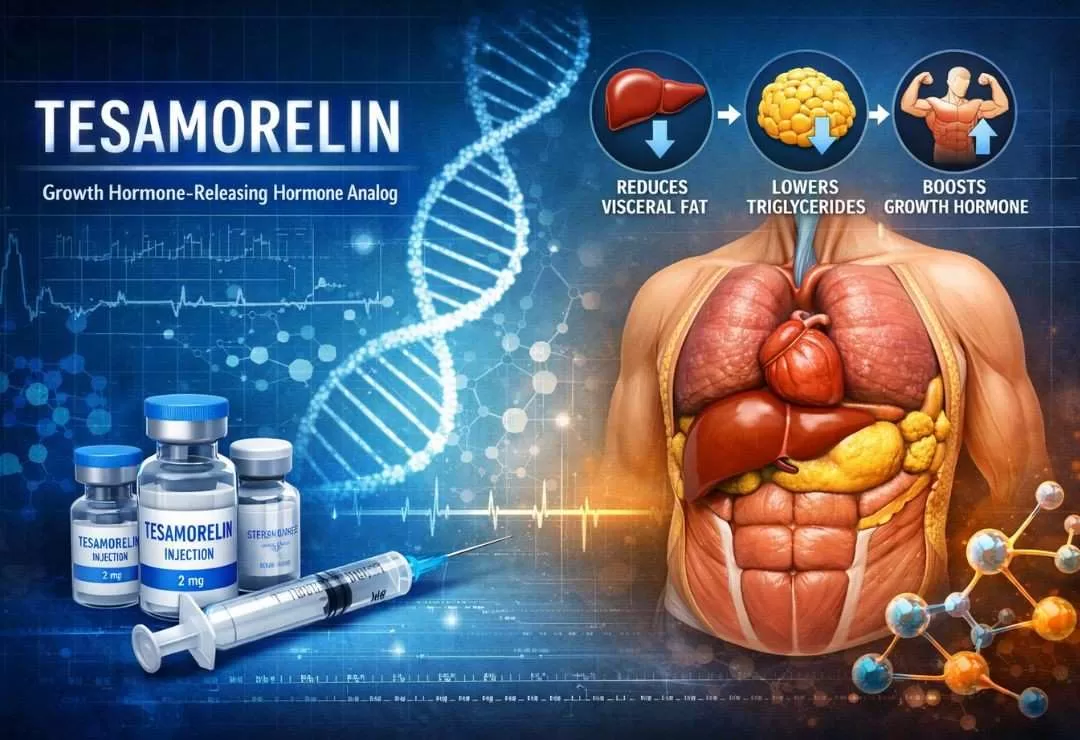
The Tesamorelin research benefits for visceral fat reduction remain a primary focus for researchers studying metabolic syndrome in 2026. As a potent GHRH analogue, Tesamorelin specifically targets ectopic fat while preserving lean mass. This profile is often compared to the results found in our muscle wasting research guide.
Lipodystrophy Research Data
Data points highlight a significant reduction in abdominal adipose tissue without negatively impacting glucose metabolism. For sourcing, see our USA peptide vendor list.
Tesamorelin Research Benefits for Visceral Fat
1. Introduction
Tesamorelin is a synthetic analog of growth hormone–releasing hormone (GHRH), designed to stimulate the pituitary gland to secrete growth hormone (GH). Its most studied application is in reducing visceral adipose tissue (VAT) — the deep abdominal fat surrounding internal organs, strongly linked to metabolic disorders, cardiovascular disease, and insulin resistance.
Research on Tesamorelin has provided compelling evidence that it can selectively reduce visceral fat while preserving or even improving metabolic balance, making it a unique peptide in the field of endocrinology and metabolic research.
2. Mechanism of Action
- GHRH Analog: Tesamorelin binds to GHRH receptors in the pituitary, stimulating GH release.
- IGF‑1 Pathway: GH increases hepatic production of insulin‑like growth factor 1 (IGF‑1), which drives lipolysis and metabolic regulation.
- Visceral Fat Targeting: Unlike many interventions, Tesamorelin preferentially reduces VAT without significantly affecting subcutaneous fat.
- Metabolic Benefits: Improved lipid profiles, reduced triglycerides, and enhanced insulin sensitivity have been observed in clinical studies.
3. Research Results on Visceral Fat Reduction
Clinical Trials
- HIV‑Associated Lipodystrophy: Tesamorelin is FDA‑approved for reducing VAT in HIV patients with lipodystrophy. Trials showed 15–20% reductions in visceral fat volume after 6 months of treatment.
- Metabolic Improvements: Patients experienced improved triglyceride levels and reduced cardiovascular risk markers.
- Sustained Effects: Continued use maintained VAT reduction, while discontinuation led to partial rebound.
Broader Research Applications
- Obesity Studies: Early trials suggest Tesamorelin may benefit non‑HIV populations with central obesity, though more data is needed.
- Diabetes Risk Reduction: By lowering VAT, Tesamorelin may reduce insulin resistance and type 2 diabetes risk.
- Cardiovascular Health: VAT reduction correlates with improved vascular function and reduced inflammatory markers.
4. Benefits Observed
- Selective VAT Reduction: Significant decreases in visceral fat without major loss of lean muscle.
- Improved Lipid Profiles: Lower triglycerides and improved cholesterol balance.
- Enhanced Insulin Sensitivity: Reduction in insulin resistance markers.
- Quality of Life: Patients reported improved body image and reduced metabolic complications.
5. Risks & Limitations
- Side Effects: Injection site reactions, edema, joint pain, and mild glucose intolerance in some patients.
- Population Specificity: Most robust data comes from HIV‑associated lipodystrophy; broader applications remain investigational.
- Rebound Effect: VAT reduction diminishes if therapy is discontinued.
- Regulatory Boundaries: FDA approval limited to HIV patients with lipodystrophy; off‑label use is not sanctioned.
6. Educational Insights
Tesamorelin research demonstrates how targeted endocrine modulation can selectively reduce harmful fat depots while preserving lean tissue. It is a case study in precision peptide design:
- Mechanistic Specificity: Acts via GH/IGF‑1 axis but shows preferential VAT reduction.
- Clinical Impact: Improves metabolic health in a high‑risk population.
- Future Potential: Could expand into obesity, diabetes, and cardiovascular research if ongoing trials confirm efficacy.
7. Conclusion
Tesamorelin stands out in peptide research for its unique ability to reduce visceral fat, a key driver of metabolic disease. While currently approved for HIV‑associated lipodystrophy, its broader potential in obesity and metabolic syndrome remains under investigation.
For educational purposes, Tesamorelin illustrates how hormone analogs can be engineered to address specific metabolic challenges, offering insights into the future of peptide‑based therapies for fat distribution and endocrine balance.