

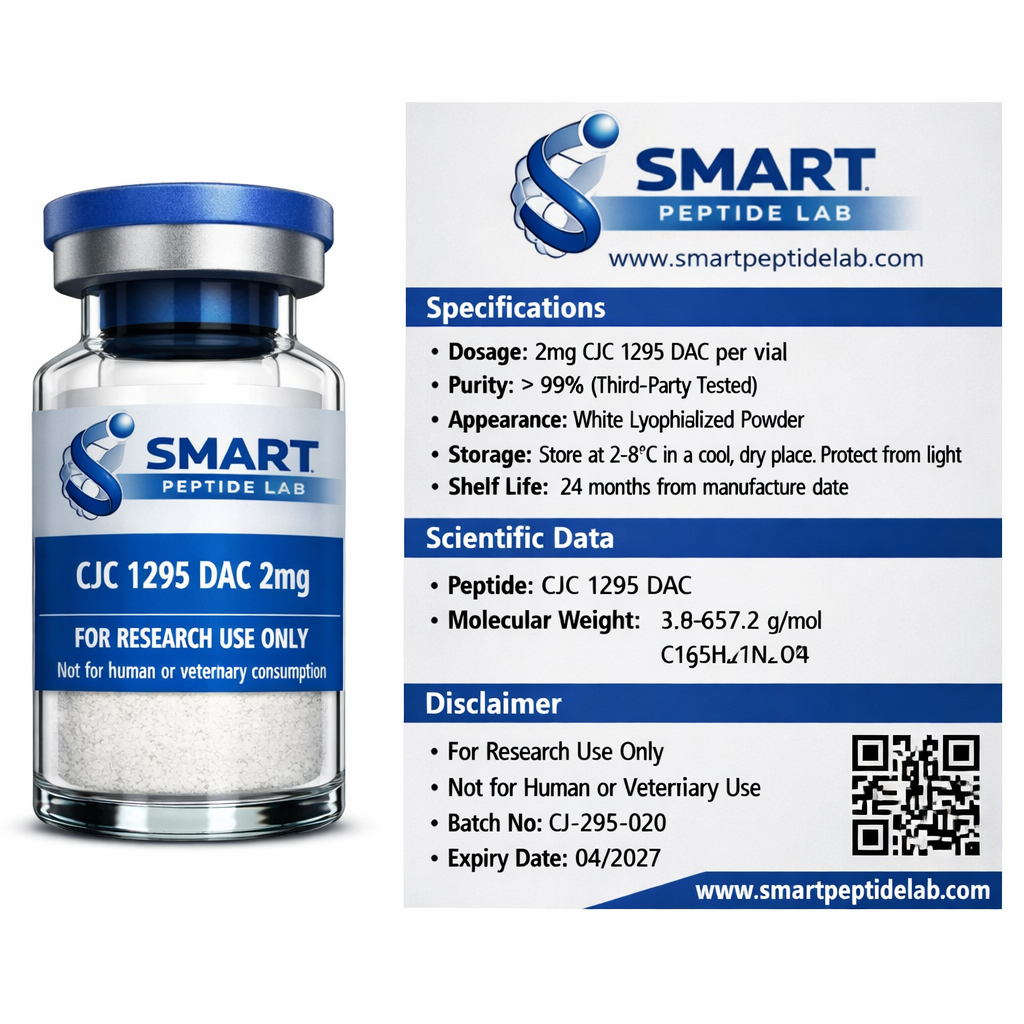
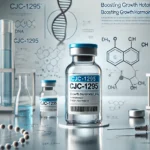
CJC 1295 NO DAC 2mg – Targeted Growth Hormone Support
CJC-1295 (No DAC) is a fast-acting GHRH (growth hormone-releasing hormone) peptide designed to stimulate the body’s natural production of growth hormone in short, controlled pulses. The 2mg vial is ideal for users who prefer small, precise doses, beginners, or those following a micro-dosing protocol for gradual results.
By promoting natural GH release, CJC-1295 (No DAC) helps support lean muscle growth, fat metabolism, recovery, and overall vitality without disrupting the body’s hormonal balance.
Key Benefits Of CJC 1295 NO DAC
Natural Growth Hormone Stimulation:
Supports GH release in a physiologically aligned, pulsatile manner.Lean Muscle & Strength Support:
Assists in building muscle mass and improving strength.Fat Loss & Metabolic Support:
Helps optimize fat metabolism and body composition.Enhanced Recovery:
Reduces downtime after workouts, injuries, or intense physical activity.Sleep & Anti-Aging Support:
Promotes deeper restorative sleep and may improve skin, energy, and vitality.
Overview
CJC-1295 without DAC, alternatively known as the tetra-substituted GRF (1-29), represents a synthetic variant of the naturally occurring hormone responsible for the release of growth hormone (GHRH). Scholars have posited that it facilitates the secretion of growth hormone (GH). This compound is essentially constructed from the minimal sequence of amino acids that might bind to GHRH receptors, specifically the initial 29 amino acids of GHRH. There are notable structural differences between CJC-1295 without DAC and the unmodified fragment, primarily due to the alteration of four amino acids within the original 29 amino acids of GHRH. These changes encompass the 2nd, 8th, 15th, and 27th amino acids, and such adjustments might arguably extend the peptide’s lifespan against enzymatic breakdown, particularly by enzymes like dipeptidyl peptidase-4 (DPP-4).(4)
More specifically, these alterations include:
- The replacement of L-alanine with D-alanine at the 2nd position, which is thought to bolster resistance against molecular degradation.
- The substitution of asparagine with glutamine at the 8th position, which could conceivably minimize asparagine reconfiguration and amide hydrolysis.
- The exchange of glycine for alanine at the 15th position, which is speculated to enhance bioactivity.
- The alteration from methionine to leucine at the 27th position, which is suggested to prevent methionine oxidation.
How It Works:
CJC-1295 (No DAC) binds to GHRH receptors in the pituitary gland, triggering short bursts of GH release. Its fast-acting, non-DAC profile ensures natural GH pulses, minimizing desensitization and maintaining long-term effectiveness.
Recommended Usage:
Typically administered via subcutaneous injection. Due to the shorter half-life, 1–3 daily doses are commonly used, often with an evening injection to align with natural GH secretion cycles. Professional guidance is recommended for optimal dosing and results.
Why Choose CJC-1295 (No DAC) 2mg:
Ideal for beginners or those seeking precise, controlled dosing, this 2mg option allows flexibility while still providing all the benefits of GH optimization, recovery support, and overall wellness enhancement.
Chemical Makeup
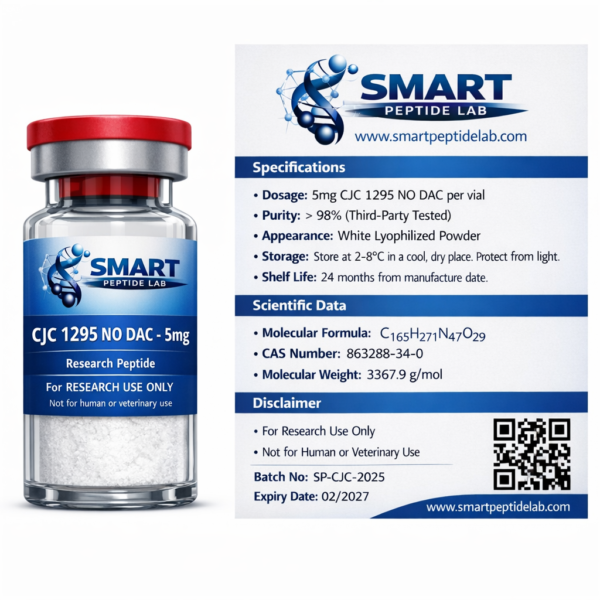
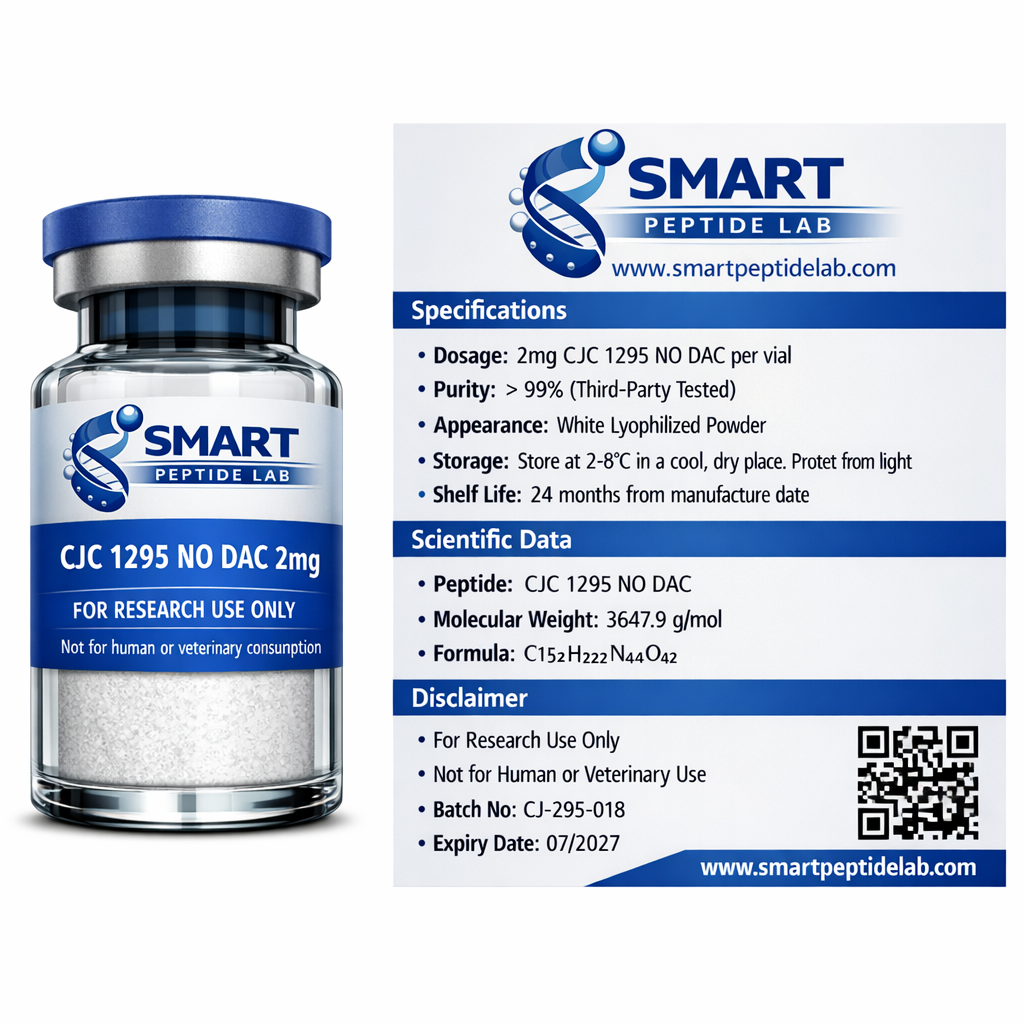
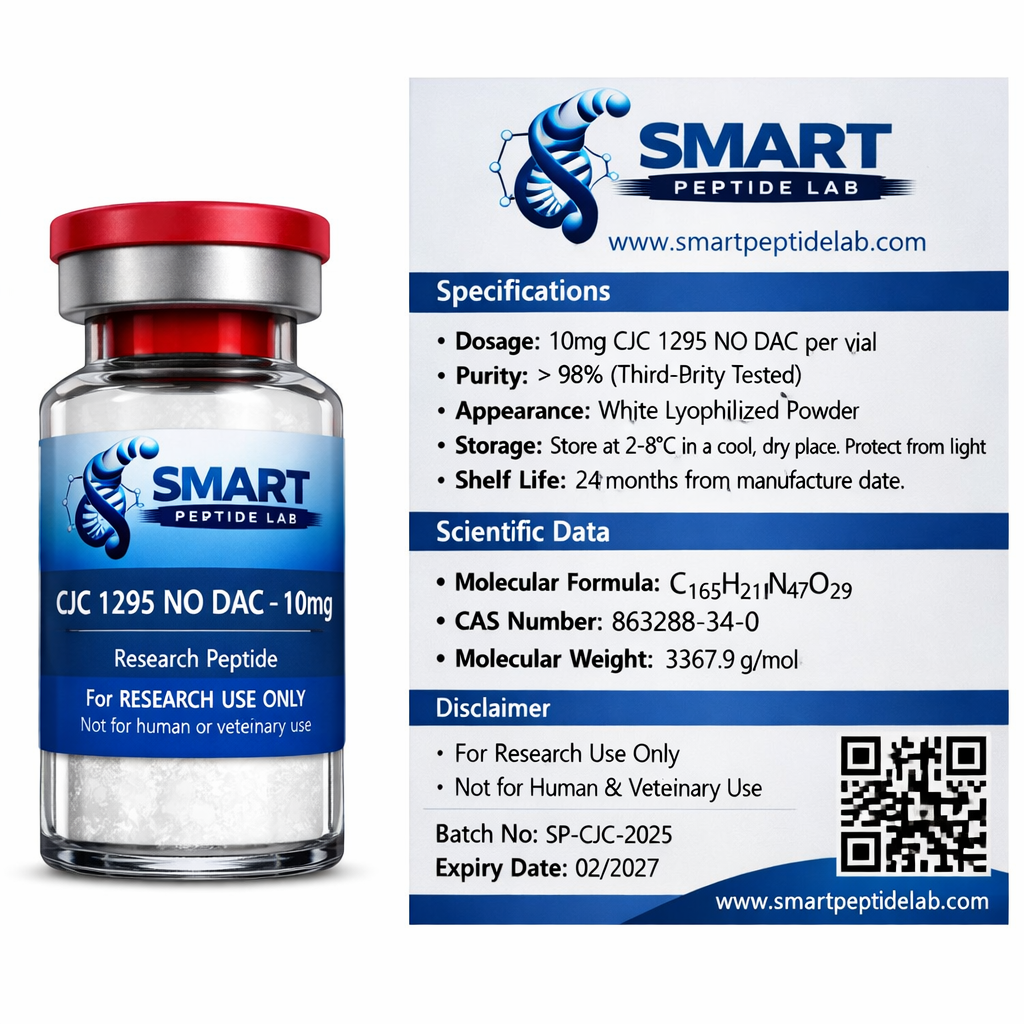
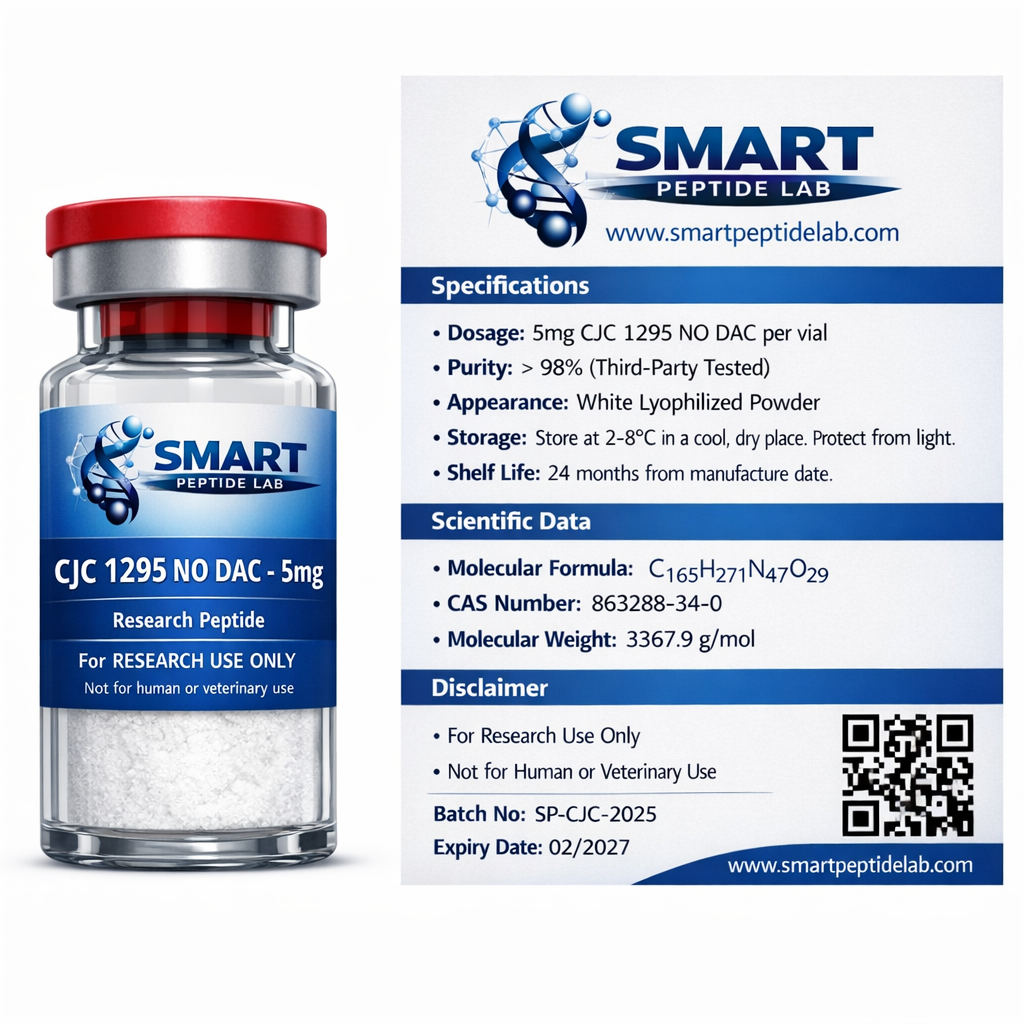
Molecular Formula: C152H252N44O42
Molecular Weight: 3367.9 g/mol
Other Known Titles: CJC-1295 Without DAC
Research and Clinical Studies
CJC-1295 (No DAC) Peptide and the Pituitary Gland
CJC-1295 without DAC seems to aim at the GHRH receptor on pituitary cells, potentially engaging with certain binding sites on the receptor molecule. This interaction may induce alterations in the receptor’s conformation, possibly sparking a chain of molecular events that might activate signaling pathways within its target cells. The induced structural changes are believed to facilitate the activation of G-proteins, signaling proteins theorized to reside on the cell’s interior side of the GHRH receptor.(5) Once activated, these G-proteins might trigger the production of secondary messengers like cAMP or IP3, which are thought to act as intermediary signaling molecules, possibly amplifying the signal inside the cell. Particularly, cAMP may activate protein kinases, which are presumed to be pivotal in phosphorylating specific target proteins.(6) Protein kinases are suggested to have a potential role in managing various cell functions. The stimulation of protein kinases could lead to the phosphorylation of transcription factors, proteins that might influence gene expression regulation. These phosphorylated transcription factors may then enter the nucleus and might alter the transcription of genes linked to the synthesis and secretion of growth hormone. Consequently, the molecular activities seemingly initiated by CJC-1295 no DAC’s binding may culminate in the merging of secretory vesicles loaded with growth hormone with the cell membrane. This merger may facilitate the external release of growth hormone from the pituitary cells, potentially enabling it to perform its biological functions.
CJC-1295 (No DAC) Peptide and Growth Hormone Pulsatility
While no studies directly investigate the potential of CJC-1295 no DAC (tetrasubstituted GRF 1-29), some researchers have conducted extensive experimentations with partially modified versions of GRF 1-29. One notable example is research by Khorram et al. This study on CJC-1295 no DAC explored its potential on growth hormone and insulin-like growth factor 1 (IGF-1), skin cell proliferation, muscle tissue hypertrophy, and other potential outcomes.(7) The investigation highlighted the potential of CJC-1295 no DAC to modulate the growth hormone-IGF-1 axis. More specifically, CJC-1295 no DAC appeared to cause a considerable rise, with an approximate increase of 70-107% higher mean 12-hours release of growth hormone by the somatotroph cells in the anterior pituitary. Concurrently, IGF-1 also experienced an increase, approximately 28%, indicating an enhancement in the growth hormone-IGF-1 axis functionality. This increase was also associated with increases in skin tissue thickness, potentially due to the anabolic actions of growth hormone and IGF-1 on collagen-producing skin cells such as fibroblasts. Furthermore, there was a significant increase in muscle tissue hypertrophy, ultimately resulting in a net lean mass gain of 2.77 lbs. These results imply a potential role of CJC-1295 no DAC in promoting skin cell proliferation and muscle tissue hypertrophy that should be investigated in future experiments. However, the specific mechanisms behind these actions remain to be fully elucidated.
CJC-1295 (No DAC) Peptide and Intestinal Studies
Studies(8) were conducted in experimental models, which have suggested a potential interaction between GHRH analog peptides and VPAC(1)-R, found on the smooth muscles of the gastrointestinal system. This interaction was suggested to induce bowel movement, though the potential connection between specific peptides and bowel release are still under investigation.
CJC-1295 (No DAC) Peptide and Heart Rate
Preliminary research(9) in murine models suggested that Modified GRF 1-29 peptide (along with other GHRH derivative analogs) may exhibit some potential to improve heart rate and possibly support the heart’s ability to pump blood, particularly following a heart attack. The study(9) commented that GHRH agonist peptides appeared to promote cardiac tissue repair and possibly also improve ejection fraction rates.
CJC-1295 (No DAC) Peptide and Combination
CJC-1295 NO DAC appears to be a relatively short-lasting GHRH analog when not attached to DAC, compared to other synthetic GHRH peptides. Consequently, combined with other short-acting peptides, it may support longer durations for specific properties. Moreover, the peptide may have synergistic actions when combined with growth hormone secretagogues (GHSs). GHSs are considered to be ghrelin mimetics, which interact with the ghrelin receptors within various tissues. These receptors also happen to be found on the somatotroph cells in the anterior pituitary gland – the same cells that also have the GHRH receptors and are associated with growth hormone synthesis. Activating these receptors may lead to an apparent increase in growth hormone synthesis, and some researchers suggest that the simultaneous activation of the GHRH and ghrelin receptors on these pituitary cells may result in synergistically increased growth hormone elevation.(11) One such highly common peptide combination is with Ipamorelin, a synthetic GHRH pentapeptide. Both Ipamorelin and CJC-1295 peptides have been suggested to stimulate the production of growth hormone by the cells of the pituitary gland, albeit via different modes of action, therefore possibly exerting synergism and stimulating even greater growth hormone secretion.
Why Buy CJC 1295 NO DAC Online from Smart Peptide Lab?
Choosing where to buy CJC 1295 NO DAC online is important for ensuring reliable results and product integrity.
✔ High Purity Standards
Our CJC 1295 NO DAC for sale is produced under strict quality control to ensure consistency and accuracy.
✔ Third-Party Testing
Each batch is independently verified, giving you confidence when you buy CJC 1295 NO DAC online.
✔ Laboratory-Grade Production
We follow controlled manufacturing processes to maintain peptide stability and quality.
✔ Global Shipping
Customers in the USA, UK, Canada, Australia, Germany, France, Spain, Portugal, Switzerland, and across Europe can easily buy CJC 1295 NO DAC online.
Buy CJC 1295 NO DAC Online for Sale – Global Demand
The demand to buy CJC 1295 NO DAC online continues to grow as peptide research expands worldwide. Access to a reliable supplier ensures consistent product availability and dependable quality.
Smart Peptide Lab offers CJC 1295 NO DAC for sale with:
- Fast international shipping
- Secure packaging
- Reliable inventory
No matter your location, you can confidently buy CJC 1295 NO DAC online with ease.
Quality Assurance & Product Integrity
When you buy CJC 1295 NO DAC online, quality assurance is essential. At Smart Peptide Lab, we guarantee:
- Verified purity levels
- Consistent batch production
- Secure packaging for safe delivery
Every order of CJC 1295 NO DAC for sale is handled carefully to maintain product integrity.
CJC-1295 peptide is available for research and laboratory purposes only. Please review and adhere to our Terms and Conditions before ordering.
References:
- National Center for Biotechnology Information. “PubChem Compound Summary for CID 91976842, CJC1295 Without DAC” PubChem, https://pubchem.ncbi.nlm.nih.gov/compound/CJC1295-Without-DAC
- Clark, R G, and I C Robinson. “Growth induced by pulsatile infusion of an amidated fragment of human growth hormone releasing factor in normal and GHRF-deficient rats.” Nature vol. 314,6008 (1985): 281-3. https://pubmed.ncbi.nlm.nih.gov/2858818/
- The Discovery of Growth Hormone-Releasing Hormone: An Update https://onlinelibrary.wiley.com/doi/full/10.1111/j.1365-2826.2008.01740.x
- Martin, B., Lopez de Maturana, R., Brenneman, R., Walent, T., Mattson, M. P., & Maudsley, S. (2005). Class II G protein-coupled receptors and their ligands in neuronal function and protection. Neuromolecular medicine, 7(1-2), 3–36. https://doi.org/10.1385/nmm:7:1-2:003
- Newton, A. C., Bootman, M. D., & Scott, J. D. (2016). Second Messengers. Cold Spring Harbor perspectives in biology, 8(8), a005926. https://doi.org/10.1101/cshperspect.a005926
- Khorram, O., Laughlin, G. A., & Yen, S. S. (1997). Endocrine and metabolic effects of long-term administration of [Nle27]growth hormone-releasing hormone-(1-29)-NH2 in age-advanced men and women. The Journal of clinical endocrinology and metabolism, 82(5), 1472–1479. https://doi.org/10.1210/jcem.82.5.3943
- Ito T, Igarashi H, Pradhan TK, Hou W, Mantey SA, Taylor JE, Murphy WA, Coy DH, Jensen RT. GI side-effects of a possible therapeutic GRF analogue in monkeys are likely due to VIP receptor agonist activity. Peptides. 2001 Jul;22(7):1139-51. https://pubmed.ncbi.nlm.nih.gov/11445245/
- Schally AV, Zhang X, Cai R, Hare JM, Granata R, Bartoli M. Actions and Potential Therapeutic Applications of Growth Hormone-Releasing Hormone Agonists. Endocrinology. 2019 Jul 1;160(7):1600-1612. https://pubmed.ncbi.nlm.nih.gov/31070727/
- Sinha, D. K., Balasubramanian, A., Tatem, A. J., Rivera-Mirabal, J., Yu, J., Kovac, J., Pastuszak, A. W., & Lipshultz, L. I. (2020). Beyond the androgen receptor: the role of growth hormone secretagogues in the modern management of body composition in hypogonadal males. Translational andrology and urology, 9(Suppl 2), S149–S159. https://doi.org/10.21037/tau.2019.11.30






Reviews
There are no reviews yet.