

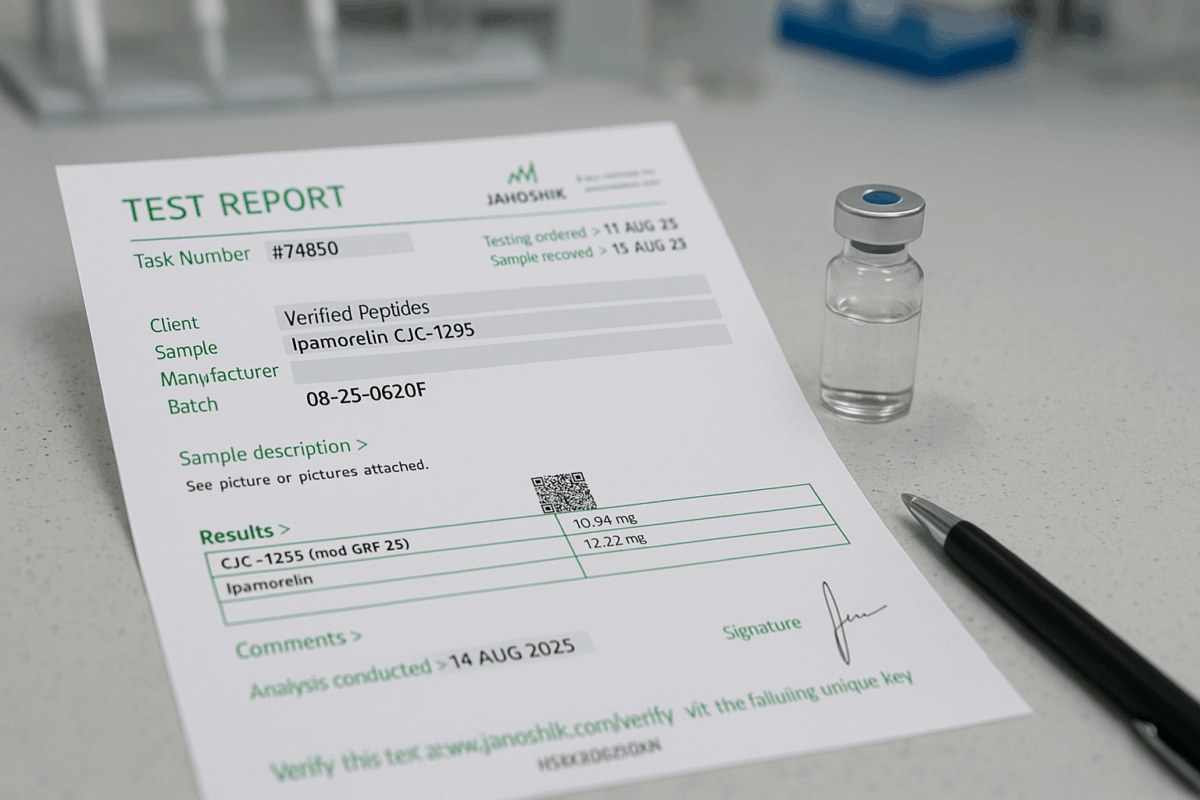
Learning how to verify peptide purity reports (COA) is the best way to ensure your research integrity. Whether you are looking at where to buy Tesamorelin peptides or other compounds, the HPLC and MS reports are your only guarantee of quality.
What to Look for in a COA
- Purity Percentage (Target >98%)
- Batch Number matching the vial
- Third-party lab accreditation
🔬 Step 1: Check the Testing Method
- HPLC (High‑Performance Liquid Chromatography): Confirms purity percentage by separating peptide components.
- Mass Spectrometry (MS): Verifies molecular weight and sequence accuracy.
- NMR (Nuclear Magnetic Resonance): Provides structural confirmation for complex peptides.
- Amino Acid Analysis: Ensures correct composition and ratio of residues.
📊 Step 2: Review the Report Details
- Purity Percentage: Look for ≥95% purity for research‑grade peptides.
- Chromatogram Peaks: A clean single peak indicates high purity; multiple peaks suggest impurities.
- Molecular Weight Match: MS data should align with the theoretical peptide mass.
- Batch Number & Date: Ensure the report corresponds to the specific lot you purchased.
⚖️ Step 3: Verify Compliance Notes
- Reports should clearly state: “For Research Use Only. Not for Human or Veterinary Use.”
- Check that the lab follows GLP (Good Laboratory Practice) or ISO‑certified standards.
🧩 Step 4: Cross‑Check with Supplier
- Request original lab certificates rather than summaries.
- Compare results across multiple batches for consistency.
- Ensure the supplier provides third‑party validation (independent lab testing).
⚠️ Red Flags to Watch For
- Missing chromatograms or incomplete data.
- Purity listed without supporting method (e.g., “99% pure” but no HPLC/MS evidence).
- Reports lacking batch numbers or testing dates.
- Inconsistent formatting or suspiciously generic certificates.
📚 Educational Insight 0f how to verify peptide purity reports (COA)
Verifying peptide purity reports is about method transparency and data consistency. Reliable suppliers provide full chromatograms, mass spectra, and batch‑specific certificates. This ensures researchers can trust the peptide’s integrity and reproducibility in experiments.
✅ In summary: Always confirm testing method, purity percentage, batch details, and compliance notes. Cross‑check with independent validation when possible to ensure your peptide reports are authentic and scientifically reliable.

3 thoughts on “How to Verify Peptide Purity Reports (COA)”