

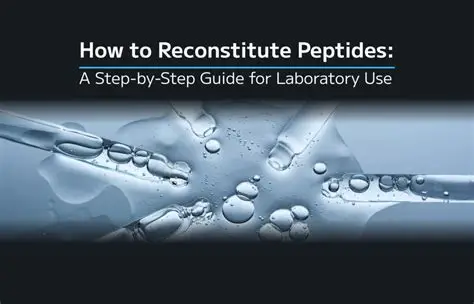
Understanding peptide reconstitution for research studies is a fundamental skill for any lab technician. Using the correct volume of bacteriostatic water ensures accurate dosing. This is particularly important for growth hormone secretagogues; see our guide on where to buy Tesamorelin peptides for more context.
Reconstitution Steps
Always allow the vial to reach room temperature before adding the solvent. For metabolic agents, ensure you follow the specific protocols mentioned in our Semaglutide guide.
Peptide Reconstitution Guide for Research Studies
🧴 Step 1: Prepare Your Workspace
- Work in a clean, sterile environment (biosafety cabinet if available).
- Use sterile gloves, pipettes, and vials to avoid contamination.
- Ensure peptides remain protected from light and moisture.
💧 Step 2: Choose the Right Solvent
- Sterile Water for Injection (SWFI): Common for most peptides.
- Bacteriostatic Water (0.9% benzyl alcohol): Extends shelf life for short‑term storage.
- Acetic Acid (0.1% solution): Used for peptides with poor solubility in water.
- Buffer Solutions (PBS, Tris): For peptides requiring pH stabilization.
Always check the peptide’s solubility data sheet before selecting a solvent.
⚖️ Step 3: Calculate Concentration
- Determine the desired concentration (e.g., mg/mL).
- Use the peptide’s molecular weight to calculate molar solutions if needed.
- Example: For a 10 mg peptide vial, adding 2 mL solvent yields 5 mg/mL solution.
🧪 Step 4: Reconstitution Process
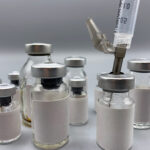
- Gently add solvent down the side of the vial to avoid foaming.
- Do not shake vigorously; instead, swirl or roll the vial until dissolved.
- If insoluble, use a small amount of acetic acid or DMSO, then dilute with water/buffer.
❄️ Step 5: Storage After Reconstitution
- Short‑Term (days to weeks): Store at 4 °C (refrigerator).
- Long‑Term (months): Aliquot into sterile vials and freeze at −20 °C or −80 °C.
- Avoid repeated freeze‑thaw cycles by using aliquots.
⚠️ Safety & Compliance Notes
- Label vials with peptide name, concentration, batch number, and date.
- Always include: “For Research Use Only. Not for Human or Veterinary Use.”
- Dispose of unused solutions according to lab safety protocols.
📚 Educational Insight
Reconstitution is about matching solvent to peptide chemistry, calculating precise concentrations, and preventing degradation. Proper technique ensures reproducibility and stability in research studies.
✅ In summary: Use sterile solvents, calculate concentrations carefully, dissolve gently, aliquot for storage, and always follow compliance and safety protocols.


3 thoughts on “Peptide Reconstitution Guide for Research Studies”