

The Tirzepatide research results for cardiovascular health in 2026 are highlighting its potential beyond glucose control. As a dual GLP-1/GIP agonist, Tirzepatide is being studied for its impact on lipid profiles and arterial health. Compare this with our Retatrutide triple-agonist review for more metabolic data.
Cardio-Metabolic Synergy
Research models indicate improved cardiovascular markers alongside significant weight regulation. For preparation protocols, see our reconstitution guide.
📘 Tirzepatide Research Results for Cardiovascular Health
1. Introduction
Tirzepatide is a dual GIP/GLP‑1 receptor agonist originally developed for type 2 diabetes and obesity. Beyond its metabolic effects, recent large‑scale trials have revealed significant cardiovascular benefits, including reduced mortality, improved heart failure outcomes, and better cardiometabolic profiles. This positions Tirzepatide as a potential cornerstone therapy in integrated cardiovascular and metabolic care.
2. Mechanisms of Cardiovascular Benefit
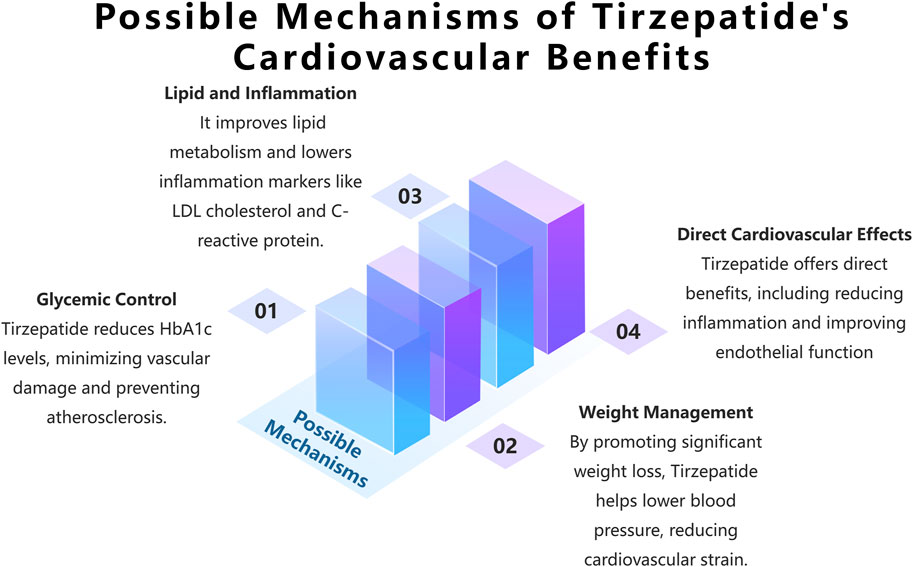
- Dual Incretin Action: Enhances insulin secretion, reduces appetite, and improves glycemic control.
- Weight Reduction: Sustained weight loss lowers cardiac workload and reduces risk factors for heart disease.
- Blood Pressure & Lipids: Trials show reductions in systolic blood pressure, triglycerides, and improved cholesterol balance.
- Anti‑Inflammatory Effects: Decreases systemic inflammation and improves endothelial function.
- Cardiac Remodeling: Imaging studies reveal reverse remodeling in obesity‑related heart failure with preserved ejection fraction (HFpEF).
3. Research Results
Mortality Reduction
- Clinical data presented at cardiology conferences (2025–2026) showed up to 62% reduction in cardiovascular death risk among high‑risk patients undergoing percutaneous coronary intervention (PCI).
Heart Failure Outcomes
- The SUMMIT trial demonstrated Tirzepatide improved symptoms, reduced markers of myocardial stress, and lowered rates of worsening heart failure compared to placebo.
- Reverse remodeling was observed in patients with obesity‑related HFpEF.
Glycemic & Weight Benefits
- Landmark diabetes trials confirmed Tirzepatide lowers HbA1c significantly while producing >20% body weight reduction in many participants.
- These dual effects contribute to reduced cardiovascular risk.
Comparative Effectiveness
- Real‑world data suggest Tirzepatide and Semaglutide both improve cardiovascular outcomes, but Tirzepatide may deliver stronger weight‑loss effects, which indirectly enhances cardiac health.
4. Benefits Observed
- Reduced Cardiovascular Mortality (up to 62%).
- Improved Glycemic Control and Substantial Weight Loss.
- Better Lipid Profiles and Lower Blood Pressure.
- Heart Failure Symptom Relief and Reverse Remodeling.
- Potential Renal Stabilization alongside cardiac benefits.
5. Risks & Limitations
- Side Effects: Gastrointestinal events (nausea, vomiting, diarrhea) are most common.
- Biliary Events: Slightly higher risk at higher doses.
- Pancreatitis: No clear elevation, but monitoring advised.
- Data Gaps: Limited evidence in advanced systolic heart failure (HFrEF); caution recommended.
- Regulatory Status: Approved for diabetes and obesity; cardiovascular indications under further study.
6. Educational Insights
Tirzepatide research underscores how dual incretin agonism can reshape cardiovascular care by addressing obesity, diabetes, and heart failure simultaneously. It exemplifies a multi‑target approach: weight reduction, metabolic control, and direct cardiac benefits.
For educational purposes, Tirzepatide serves as a case study in integrated cardiometabolic therapy, showing how one drug can influence multiple risk factors and outcomes in cardiovascular health.
7. Conclusion
Tirzepatide’s cardiovascular research results are striking: mortality reduction, improved heart failure outcomes, and broad cardiometabolic benefits. While long‑term safety and expanded indications are still under investigation, current evidence positions Tirzepatide as a transformative therapy in the fight against cardiovascular disease.









One thought on “Tirzepatide Research Results for Cardiovascular Health”