

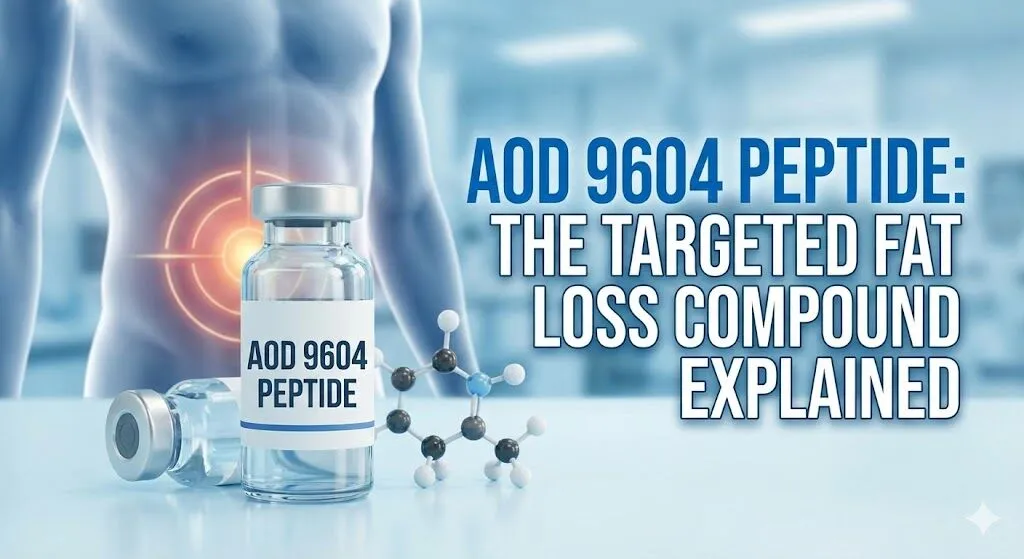
The AOD-9604 research results for fat loss in 2026 highlight its unique ability to stimulate lipolysis without affecting blood glucose. This fragment of the human growth hormone C-terminus is a staple in metabolic research. For a broader look at metabolic agents, see our Semaglutide guide or the newer Retatrutide data.
Lipolytic Mechanism
AOD-9604 targets adipose tissue specifically, making it a low-risk compound for researchers focusing on obesity models. Learn about sourcing high-quality fragments in our USA vendor list.
AOD‑9604 is a synthetic peptide fragment of human growth hormone studied for fat metabolism, cartilage repair, and metabolic regulation. It is not FDA‑approved for therapeutic use, but research highlights its ability to stimulate fat breakdown (lipolysis) and inhibit fat storage (lipogenesis) without triggering the growth hormone/IGF‑1 pathway.
🔬 What AOD‑9604 Is
- Origin: Developed at Monash University, Australia, as an “Anti‑Obesity Drug.”
- Structure: A 16‑amino‑acid fragment (HGH 176–191) with a modified N‑terminal tyrosine for stability.
- Mechanism: Acts independently of GH receptors, avoiding IGF‑1 elevation and growth‑related side effects.
⚡ Documented Benefits (Research Context)
- Fat Metabolism:
- Stimulates lipolysis (fat breakdown).
- Inhibits lipogenesis (new fat formation).
- Metabolic Regulation:
- Studied for improving glucose tolerance and metabolic efficiency.
- Cartilage & Tissue Repair:
- Early studies suggest potential in joint health and cartilage regeneration.
- Safety Profile:
- Trials show no significant IGF‑1 changes, reducing risks like acromegaly or insulin resistance.
📊 Research Usage Parameters
| Aspect | Details (Research Context) | |
|---|---|---|
| Dosage Range Studied | 250–1,000 mcg/day | |
| Common Research Dose | 300–500 mcg/day | |
| Administration | Subcutaneous injection | |
| Timing | Fasted state, morning or pre‑exercise | |
| Cycle Length | 12–24 weeks (Phase II trials) | |
| Half‑Life | ~30 minutes (short‑acting) | |
| Status | Research compound, not FDA‑approved |
⚠️ Limitations & Risks
- Clinical Trials: Six major trials (nearly 1,000 participants) showed modest or inconsistent weight‑loss results, leading to discontinuation as a drug candidate.
- Regulatory Status: Not approved for medical use; available only for research purposes.
- Unknown Long‑Term Effects: Limited data on extended use beyond trial durations.
- Not a “Miracle Fat Burner”: Results are less dramatic than marketed claims; effects are metabolic, not appetite‑suppressing.
📚 Educational Takeaways
- AOD‑9604 represents a targeted attempt to isolate fat‑burning properties of HGH without growth‑related risks.
- Its receptor‑independent mechanism makes it scientifically unique, but trial outcomes highlight the complexity of obesity treatment.
- For educational purposes, it serves as a case study in peptide drug development: promising molecular design, extensive investment, but limited clinical success.
Would you like me to also prepare a broad educational infographic summarizing AOD‑9604’s mechanism, benefits, and trial outcomes for teaching or presentation use?




One thought on “AOD-9604 Research Results for Fat Loss – 2026 Metabolic Study”